The global AI race just became even more dramatic.
U.S.-based AI company Anthropic has publicly accused several Chinese artificial intelligence firms of improperly extracting intelligence from its AI model, Claude. The allegation centers around a technique known as “distillation,” and the claims have sparked heated debate across the global tech community.
But the story doesn’t end there. While Anthropic points fingers outward, critics online are now pointing fingers back.
What Is the Accusation?
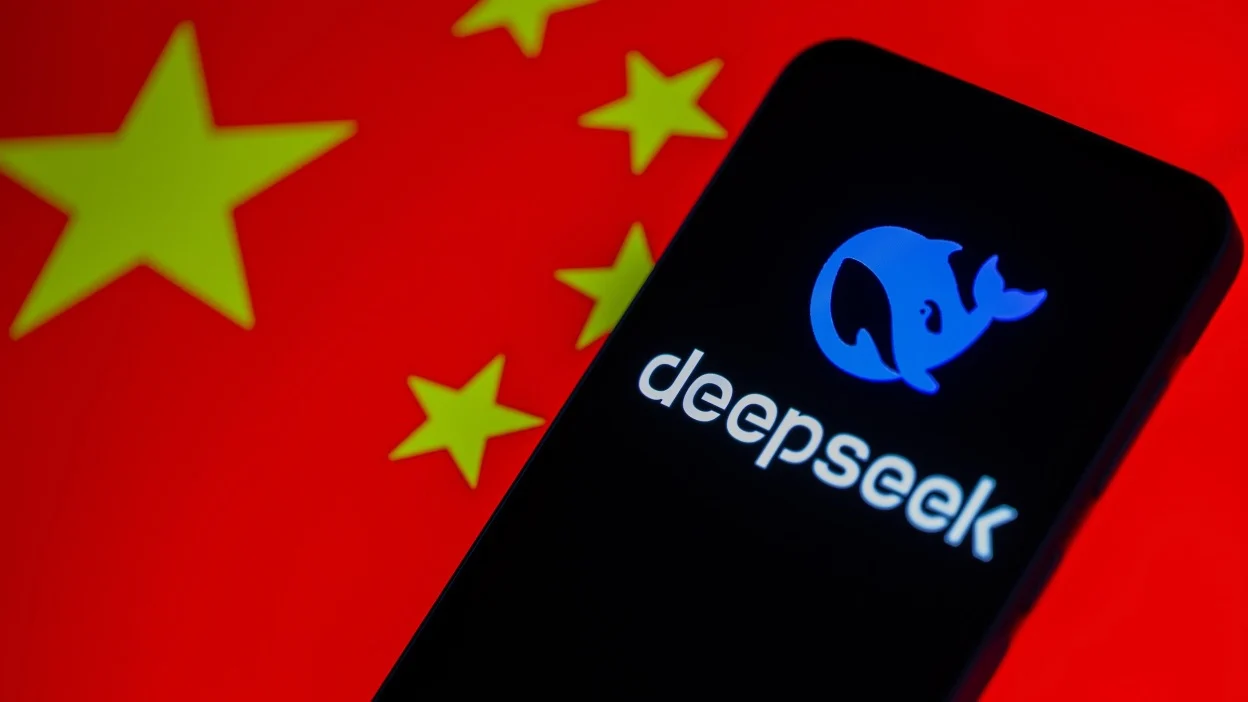
Anthropic claims that three Chinese AI companies — DeepSeek, Moonshot AI, and MiniMax — used large-scale automated interactions to train their own models using outputs generated by Anthropic’s Claude system.
According to the company, approximately 24,000 fake accounts were allegedly created to generate millions of prompts and responses. The idea, Anthropic says, was to observe how Claude responds and then use those outputs to improve rival models.
The company described this as a violation of its terms of service and a threat to intellectual property protections. In simple terms, Anthropic believes its AI’s “thinking patterns” were being studied and replicated without permission.
Understanding AI Distillation
To understand the controversy, we need to look at what “distillation” actually means in AI development.
Distillation is a common technical process where a smaller or less advanced model learns by observing the outputs of a larger, more capable model. Instead of training directly on massive datasets, developers use responses from a powerful system as guidance.
In research environments, this practice is not unusual. It helps companies reduce computing costs and accelerate development.
However, the problem arises when such learning happens without authorization — especially at a massive scale using fake accounts to bypass safeguards. That is where the ethical and legal lines begin to blur.
Internet Reaction: A Mirror Held Up
The controversy quickly spread across social media platforms, and the reaction was intense.
Many critics pointed out an irony: modern AI systems themselves are trained on vast amounts of publicly available internet data. From books to websites, forums to social media posts — large language models rely heavily on content that was not individually licensed from every creator.
Some online commentators questioned whether companies criticizing distillation are ignoring broader debates about data scraping and consent that have surrounded AI development for years.
Public figures also weighed in. Elon Musk criticized Anthropic’s stance, referencing ongoing industry-wide disputes about how training data is sourced. His remarks fueled the narrative that this isn’t just a technical disagreement — it’s part of a much larger philosophical and economic battle.
A Bigger AI Power Struggle
This dispute doesn’t exist in isolation. It reflects the broader competition between U.S. and Chinese AI ecosystems.
As AI becomes central to economic growth, national security, and global influence, tensions are rising. Companies are racing to build smarter models, more efficient systems, and stronger global partnerships.
Anthropic’s complaint also signals growing concern about intellectual property protection in AI. If a rival model can improve simply by studying outputs, how do companies protect their competitive edge?
At the same time, critics argue that the AI industry lacks clear international standards on what qualifies as fair usage, acceptable research practice, and enforceable boundaries.
The Ethical Gray Zone
One of the biggest challenges in AI today is defining ownership of intelligence.
When an AI generates a response, who owns the “reasoning” behind it? Can learning from outputs be considered copying? Or is it similar to how humans learn by reading and observing others?
There is no simple answer.
Legal systems worldwide are still trying to catch up with AI technology. Copyright law, data privacy rules, and digital trade policies were not designed for machines that can learn, adapt, and replicate patterns at scale.
What This Means for the Future
The Anthropic controversy highlights something deeper than a single accusation. It reveals the fragile trust structure within the AI ecosystem.
Companies want openness for innovation but protection for profit. They advocate ethical development but compete aggressively for market leadership. They rely on shared research culture but guard their proprietary systems fiercely.
As AI becomes more powerful, conflicts like this are likely to increase.
The question is no longer just who builds the smartest model. It is about how those models are built — and whether the industry can establish shared rules before rivalry escalates further.
For now, Anthropic’s allegations remain part of an ongoing debate. Chinese firms have not publicly admitted wrongdoing, and the global AI community continues to analyze the claims.
What is certain is this: the AI race is no longer just about code and computation. It is about ethics, ownership, transparency, and global power.