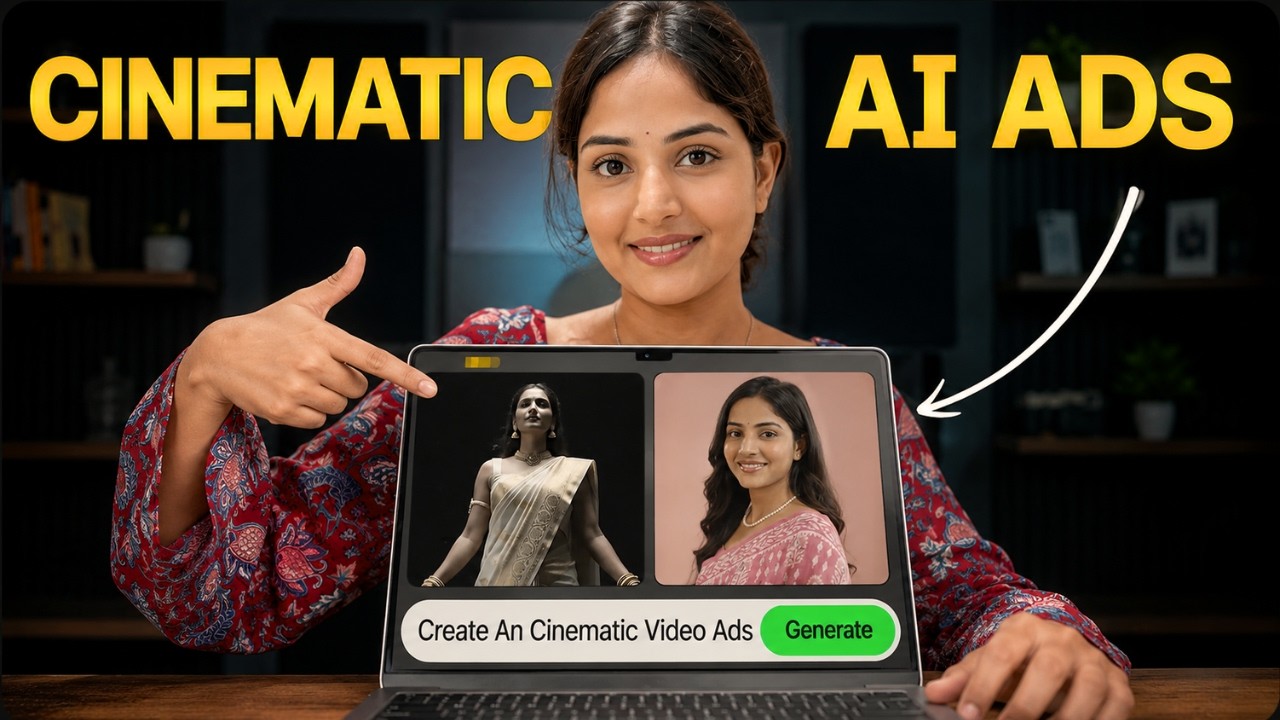
The advertising industry has entered a new era. What once demanded expensive cameras, professional lighting setups, skilled video editors, and production teams can now be achieved with the help of artificial intelligence. In just a few years, AI has evolved from generating simple images to creating cinematic videos that closely resemble professionally produced commercials.
For businesses, creators, and marketers, this shift is more than just a technological upgrade—it represents a completely new way of producing visual content. Instead of spending days planning and filming promotional campaigns, brands can now generate high-quality advertisements from a single product image and a well-crafted prompt.
Among the latest tools driving this transformation are Google Gemini and Google Flow, two AI-powered platforms that are making realistic commercial video production faster, more accessible, and significantly more affordable.
A New Chapter in Digital Marketing
Consumers scroll through thousands of pieces of content every day. On platforms like Instagram, TikTok, YouTube Shorts, and Facebook, brands often have only a few seconds to capture attention before users move on.
This has increased the demand for visually striking advertisements that deliver a premium feel without requiring massive production budgets.
Until recently, producing cinematic commercials meant renting equipment, hiring photographers and videographers, arranging locations, directing talent, editing footage, color grading, adding visual effects, and exporting multiple versions for different platforms. Even a short 10-second advertisement could take several days to complete.
Artificial intelligence is dramatically simplifying this workflow.
Modern AI models understand visual storytelling, object recognition, lighting, camera movement, composition, and product consistency. Instead of manually creating every shot, users can describe the desired scene while AI generates dynamic sequences that resemble professionally filmed advertisements.
From Product Images to Cinematic Commercials
One of the biggest breakthroughs in AI advertising is the ability to transform ordinary product photos into fully animated promotional videos.
Rather than relying on traditional video footage, AI analyzes the uploaded product image and recreates it inside a three-dimensional cinematic environment. It understands materials, colors, proportions, reflections, shadows, and textures before placing the product into scenes that mimic real commercial photography.
The result is a realistic advertisement featuring dramatic lighting, premium camera movements, and visually engaging compositions—all generated automatically.
For businesses that regularly launch new products, this significantly reduces both production time and marketing costs.
Google Gemini Brings Personal Branding Into AI
Today’s consumers are more likely to connect with real people than anonymous advertisements. Personal branding has become one of the strongest drivers of engagement across digital platforms.
Google Gemini introduces AI Avatars, allowing creators to generate a digital version of themselves that can appear naturally inside promotional videos.
Instead of hiring actors or recording every marketing campaign manually, entrepreneurs, educators, influencers, and business owners can use their own AI-generated identity to represent their brand consistently across multiple advertisements.
This creates stronger audience recognition while allowing creators to produce content at a much faster pace.
For small businesses and solo entrepreneurs, this capability has the potential to level the playing field against larger brands with bigger marketing budgets.
Google Flow Simplifies Professional Video Creation
While AI video generation has existed for some time, maintaining consistency between scenes has often been a challenge. Products would occasionally change shape, branding elements could shift, or colors might vary between shots.
Google Flow addresses many of these challenges by allowing users to upload media assets that become creative ingredients throughout the video generation process.
Instead of copying a single frame, the AI studies the uploaded elements—including product images and avatars—and builds entirely new cinematic scenes around them while preserving important visual characteristics.
This results in advertisements that feel coherent from beginning to end, making them more suitable for real-world marketing campaigns.
Why Prompt Engineering Matters
Although AI performs most of the visual generation, the quality of the final advertisement still depends heavily on the prompt provided by the user.
A simple instruction such as “make an advertisement” may generate acceptable results, but detailed prompts unlock far more impressive visuals.
By describing the atmosphere, lighting, camera movement, product placement, emotional tone, lens style, transitions, and cinematic mood, creators give the AI enough context to build scenes that resemble luxury brand commercials.
This growing importance of prompt engineering is creating an entirely new creative skillset within digital marketing. Knowing how to communicate visual ideas effectively has become almost as valuable as traditional video editing.
The Importance of Cinematic Camera Movement
Professional advertisements rarely rely on static shots. Movement plays a crucial role in directing the viewer’s attention and creating emotional impact.
AI-generated commercials can simulate many of the techniques used in high-end filmmaking, including slow dolly shots, orbit movements, macro product reveals, dramatic push-ins, sweeping hero angles, handheld realism, and smooth cinematic transitions.
These camera techniques make products appear more premium while giving the final advertisement a polished and professional appearance.
When combined with realistic reflections, soft lighting, and cinematic depth of field, AI-generated scenes become increasingly difficult to distinguish from traditional productions.
Faster Content Creation for Every Platform
One of the greatest advantages of AI advertising is speed.
Brands today are expected to publish content across multiple platforms simultaneously. A single product launch may require vertical videos for Instagram Reels, TikTok, and YouTube Shorts, square videos for social media feeds, and horizontal versions for websites or digital advertisements.
Creating each version manually consumes valuable time and resources.
AI dramatically accelerates this process by generating multiple variations in minutes. Marketers can quickly experiment with different camera angles, lighting styles, backgrounds, and storytelling approaches before selecting the strongest version for publication.
This ability to iterate rapidly gives businesses greater creative flexibility while reducing production costs.
Opportunities for Businesses of Every Size
Large corporations have traditionally dominated premium advertising because they could afford professional production teams.
Artificial intelligence is changing that reality.
Small online stores, independent creators, local businesses, startups, freelancers, educators, and e-commerce sellers now have access to tools capable of producing visually impressive advertisements without requiring significant financial investment.
Fashion brands can showcase new collections with cinematic product reveals. Cosmetic companies can create luxury-style beauty commercials. Technology brands can launch gadgets with dramatic close-up animations. Jewelry businesses can highlight intricate craftsmanship through macro cinematography.
The possibilities continue to expand as AI video technology becomes more advanced.
Challenges That Still Exist
Despite rapid progress, AI-generated advertising is not without limitations.
Complex prompts may occasionally produce inconsistent scenes, object positioning can sometimes shift unexpectedly, and certain movements may appear less natural than real-world cinematography.
Prompt quality also plays a major role in determining the final outcome. Poorly written instructions often result in generic or inconsistent videos.
As AI models continue to improve, many of these limitations are expected to become less noticeable, but creators should still review generated content carefully before publishing.
The Future of AI Advertising
Artificial intelligence is steadily becoming an essential part of modern marketing rather than a novelty.
Future AI systems are expected to deliver even greater consistency, improved physics simulation, better facial realism, enhanced storytelling capabilities, and more advanced control over camera direction and scene composition.
Businesses will likely generate personalized advertisements for different audiences, languages, and platforms with only minimal human input.
Rather than replacing creativity, AI is becoming a creative partner—handling technical production while allowing marketers to focus on storytelling, branding, and strategy.
Final Thoughts
The combination of Google Gemini and Google Flow demonstrates how quickly AI-powered video generation is evolving. What once required specialized equipment, large budgets, and experienced production teams can now be accomplished through intelligent automation and thoughtful prompt design.
For creators, entrepreneurs, and brands looking to stay competitive in today’s fast-moving digital landscape, AI-generated cinematic advertising offers an exciting opportunity to produce premium-quality marketing content faster than ever before.
As these technologies continue to mature, businesses that embrace AI early will be better positioned to create engaging campaigns, experiment with new creative ideas, and connect with audiences through visually compelling stories that were once only possible with traditional filmmaking.